
Socialising Your Rescue Dog: A Step-by-Step Guide to Building Confidence
Socialisation after adoption isn't the same as puppy socialisation. Here's how to introduce your rescue dog to new people, dogs, and environments at a pace that builds — not breaks — their confidence.
Socialisation After Adoption Is Different
When people talk about socialising a dog, they usually mean the critical puppy window (3–14 weeks). That window is closed for most rescue dogs.
But that doesn't mean socialisation is over. It means it's different.
For an adult rescue dog, the goal isn't to expose them to everything — it's to carefully build positive associations with the world, at a pace they can handle.
The Foundational Rule: Below Threshold
"Threshold" is the invisible line between "I can handle this" and "I am overwhelmed."
All good socialisation happens below threshold.
Flooding (forcing a dog to face their fear until they "get over it") does not work and causes lasting damage. If your dog is reacting, you've gone too far, too fast.
Week 1–2: Keep It Calm
The first two weeks should involve minimal new introductions. Your dog is processing an enormous amount of novelty already.
"Watch the world" sessions are powerful. Sit on a quiet bench with your dog and a treat supply. Let them watch things happen at a distance that feels safe. Mark and reward calm observation.
Meeting New People
The Rules for Visitors:
Ask visitors to ignore the dog completely on arrival
Let the dog approach in their own time — no reaching, no cooing
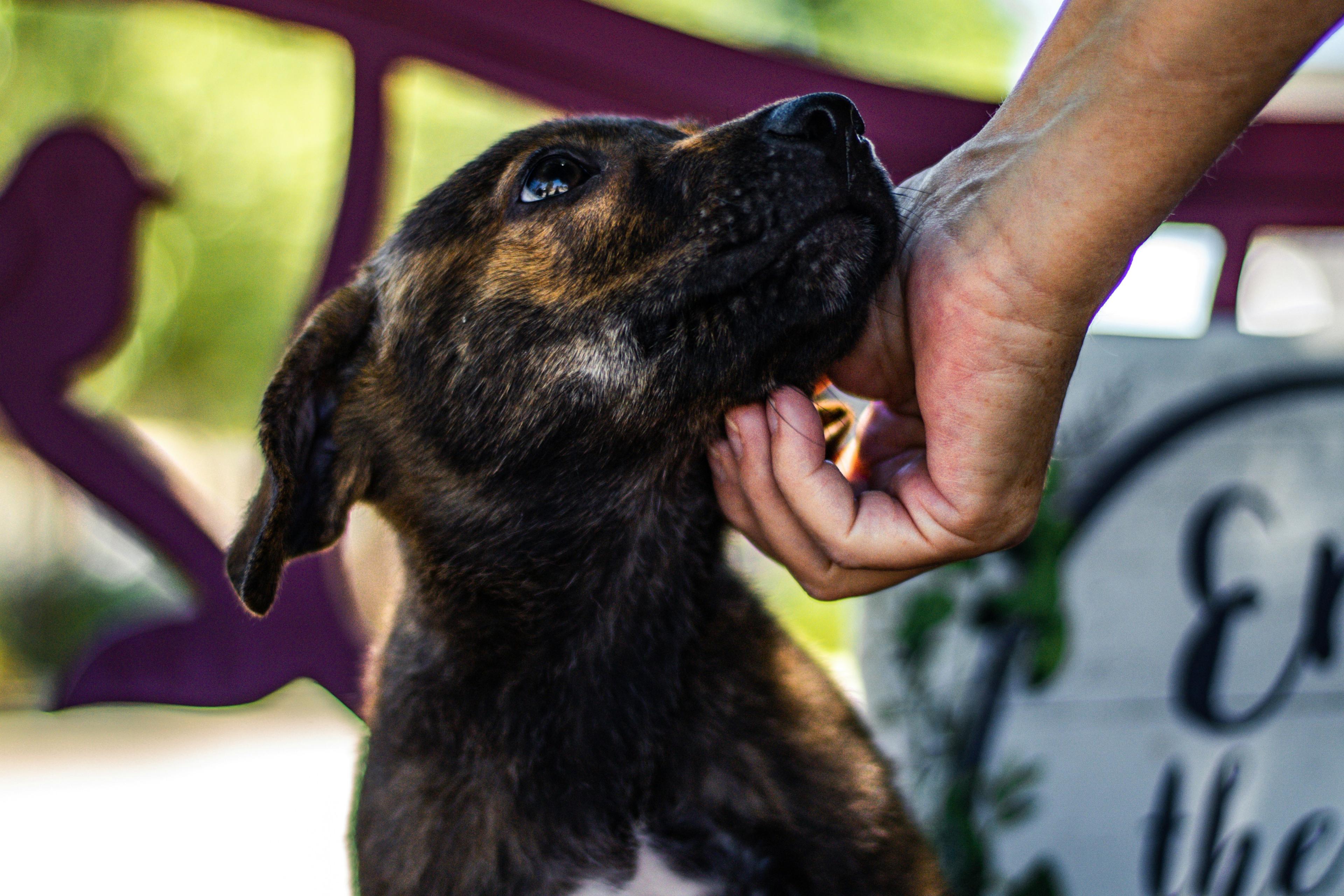
Once the dog approaches, visitors can offer the back of a hand to sniff
If the dog accepts, gentle chin or chest scratches (not head)
If the dog retreats, they need more time — no pursuit
A visitor who sits on the floor, turns sideways, and tosses treats without looking at the dog will have a confident rescue dog eating out of their hand within 20 minutes. It works every time.
Meeting Other Dogs
Not all rescue dogs need dog friends — some prefer human company and that's fine.
If you want to introduce your rescue to another dog:
The Neutral Ground Rule
Never introduce dogs at either dog's home. Always on neutral territory — a park, a quiet street, a field.
The Parallel Walk Method
Two handlers, two dogs, 10+ metres apart
Walk in the same direction (parallel, not toward each other)
Gradually close the distance over 10–15 minutes
Watch for relaxed body language on both sides before allowing any sniffing
Face-to-Face Introductions
Only after parallel walking goes well:
Dog parks are high-stimulation, unpredictable environments. Many rescue dogs are overwhelmed by them. Wait at least 3 months before trying — and even then, go during quiet hours first.
Tackling Specific Fears
Traffic and City Noise
Start at the edge of a busy area — enough to see and hear, not overwhelm
Mark and reward calm observation
Gradually move closer over multiple sessions
Children
Start with calm, older children
Teach children to offer their hand, then wait
Never leave dog and young children unsupervised
Give the dog a safe space they can retreat to
Other Animals
Introduce cats and small animals through a closed door first (scent only)
Progress to visual contact with a barrier (stair gate)
Never allow unsupervised access until behaviour is fully predictable
Stress Signals to Watch For
If you see any of these, slow down and reduce the challenge:
Products That Support Socialisation
Refusing food during socialisation is a clear sign the dog is over threshold. If your dog won't eat treats on a walk, they're too stressed to learn. Go back to a quieter environment.
The Long View
Socialisation after rescue is measured in months, not days.
Many adopters report that at the 3-month mark, a transformed dog emerged — one that once cowered at strangers now greets them with a wagging tail. That transformation happens through consistent, patient exposure below threshold, not through pushing.
helpFrequently Asked Questions
My rescue is fine with me but terrified of strangers. Is that fixable?expand_more
In many cases, yes. Fear of strangers responds well to counter-conditioning: pairing strangers with something the dog loves (treats, toys) at a distance where the dog can stay relaxed. Progress is slow but real.
Should I take my rescue to puppy/dog training classes?expand_more
Group classes can be excellent for socialisation, but choose carefully. Look for small classes, a force-free trainer, and ask if you can observe first. A class that moves too fast or uses punishment methods will be counterproductive.
Part of Your Rescue Journey
Track every step of your adoption — from research to 3 months at home.
flight_takeoffCross-Border Adoption Guides
Adopting a Rescue Dog from Romania to France: Complete Requirements Guide 2026
Romania → France
Adopting a Rescue Dog from Bulgaria to Germany: Complete Requirements Guide 2026
Bulgaria → Germany
Adopting a Rescue Dog from Greece to Sweden: Complete Requirements Guide 2026
Greece → Sweden