
This data is for informational purposes only and does not constitute legal or veterinary advice. Requirements can change without notice. Always verify current rules with your local veterinary authority, the official government portal of your destination country, and a licensed vet in the origin country before travel. Wiggly Tails accepts no liability for outdated or incomplete information.
This guide is for informational purposes only and is not legal advice. Requirements can change without notice. Always verify current rules with your local veterinary authority, the official government portal of your destination country, and a licensed vet in the origin country before travel. Wiggly Tails accepts no liability for outdated or incomplete information.
Romania is one of Europe's most active rescue corridors, with large numbers of former street dogs rehomed internationally each year. France receives significant numbers of Romanian rescue dogs, and the process is moderate in complexity: standard EU documentation applies as both countries are EU members, but France has a unique and strictly enforced two-tier breed classification system that can prohibit import of certain dog types outright. Additionally, France applies a slightly stricter minimum age (16 weeks vs. the standard 15 weeks), and dogs must be registered in the national I-CAD database and declared at the local mairie. Romania's high vector-borne disease burden also makes pre-adoption disease testing essential.
Browse verified Romanian rescue organisations and meet dogs looking for homes in France. Every dog on Wiggly Tails has a full profile with photos, health status, and behavioural notes — so you can find the right match before you commit.
---
*Last reviewed: April 2026 | Sources: EU Commission (Regulation 576/2013, 577/2013), French Ministry of Agriculture (Direction générale de l'alimentation, DGAL), Ordonnance no. 99-1220 (classification des chiens), I-CAD, Merck Veterinary Manual, ESCCAP Guidelines*
Must comply with ISO 11784/11785. Must be implanted BEFORE rabies vaccination so the chip number is recorded on the vaccination certificate.
Primary vaccination must be given after 12 weeks of age and at least 21 days before travel. The vet records the microchip number at the time of vaccination.
Issued by an authorised veterinarian in Romania. Contains microchip number, rabies vaccination record, owner details, and vet signature. This is the dog's official travel document within the EU.
France requires dogs to be at least 16 weeks old at the time of import — one week stricter than the standard EU minimum of 15 weeks. This is because France applies the 12-week minimum vaccination age plus 21-day immunity period plus an additional 7-day margin. Verify the dog's exact age carefully.
Non-commercial movement allows a maximum of 5 pets per accompanying person. More than 5 requires commercial transport procedures (TRACES registration).
France requires all dogs to be identified and registered in the national I-CAD (Identification des Carnivores Domestiques) database. Your French vet or the mairie (town hall) can assist with registration. Dogs identified after 2012 must be microchipped (tattoo identification was valid for earlier animals). Registration costs approximately €10–15.
account_balanceI-CAD / Mairie
All dogs must be declared at the mairie in your commune of residence. For Category 2 dogs (see breed restrictions below), you must also obtain an attestation d'aptitude (owner competency certificate) and present it at the mairie. The mairie can also advise on local by-laws for dog ownership.
account_balanceMairie (local town hall)
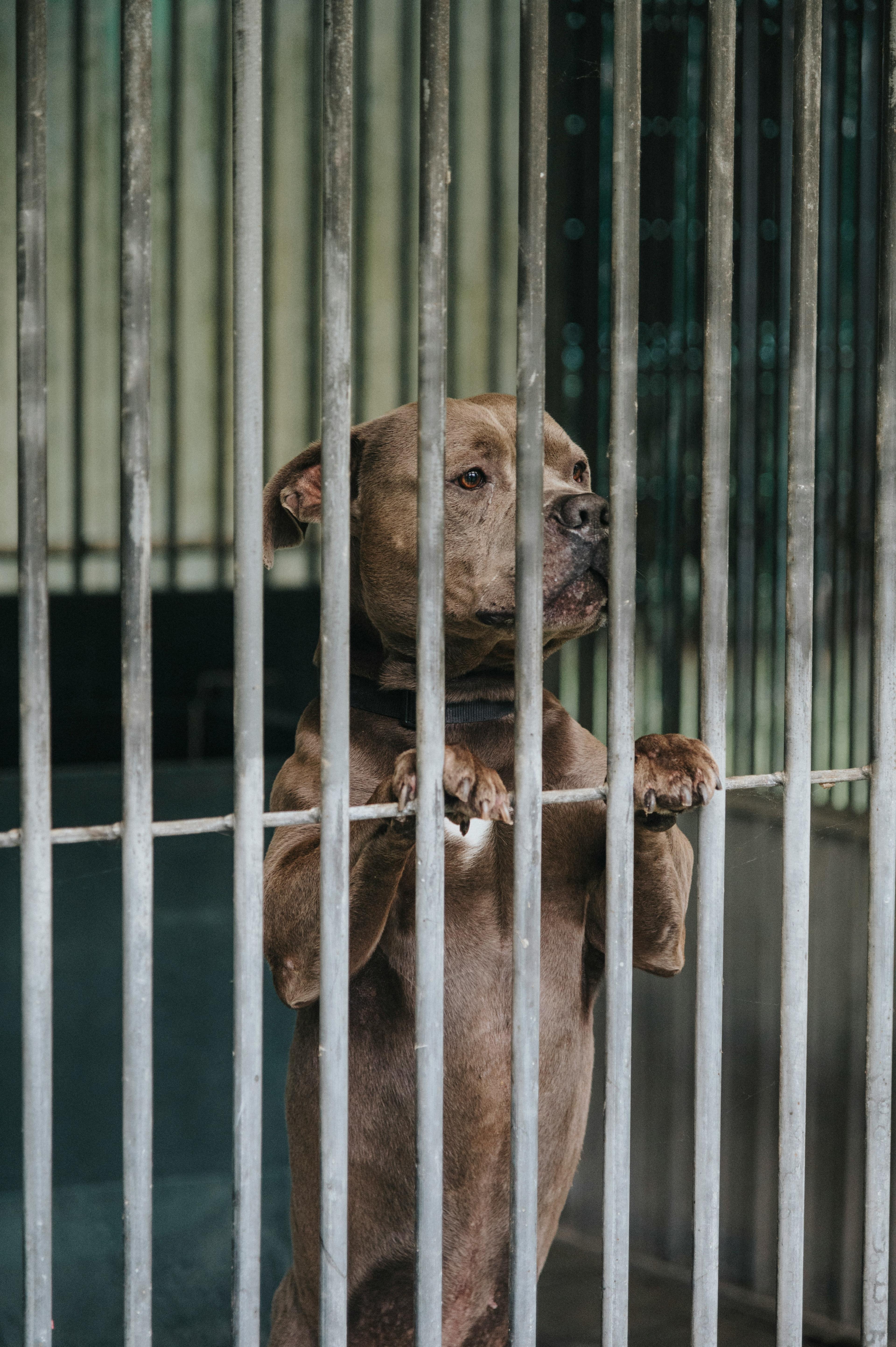
France has a two-tier breed restriction system. CATEGORY 1 (attack dogs without pedigree): Import and ownership are PROHIBITED. Includes Pit Bull-type dogs (American Staffordshire Terrier-type without SCC/LOF pedigree), Mastiff-type dogs (Boerbull/Boerboel-type without pedigree), and Tosa-type without pedigree. CATEGORY 2 (defense dogs, with pedigree): Import allowed but restricted. Includes Staffordshire Terriers, American Staffordshire Terriers, Rottweilers, and Tosas WITH SCC/LOF pedigree. Category 2 owners must be 18+, hold liability insurance, obtain an attestation d'aptitude, and keep the dog muzzled and leashed in public. If adopting a mixed-breed dog, an unregistered dog resembling a Category 1 breed may be treated as Category 1.
account_balanceDirection générale de l'alimentation (DGAL) / Mairie / Ordonnance 99-1220
Mandatory for owners of Category 1 and Category 2 dogs. Strongly recommended for all dog owners. French home insurance policies (assurance habitation) often include civil liability that covers pets — check your policy. Dedicated dog liability insurance is also available and costs approximately €50–120/year.
account_balanceAssurance habitation or dedicated policy
Owners of Category 2 dogs must complete a training course and obtain an attestation d'aptitude — a certificate confirming competency in owning a classified dog. This must be presented at the mairie along with dog registration. Category 2 dogs must also be sterilised (neutered). Contact the mairie or a local dog training organisation for the attestation process.
account_balanceMairie / certified dog training instructor
Register with a local vet shortly after arrival. Bring the EU Pet Passport. The vet will scan the microchip, register in I-CAD if not yet done, and should be informed of the dog's Romanian origin and vector-borne disease panel. This is also the time to discuss any Mediterranean disease follow-up testing.
account_balanceLocal veterinary practice
A licensed Romanian vet must examine the dog and issue/update the EU Pet Passport. For commercial transport, examination must occur within 48 hours of departure.
While not legally required for Romania→France travel, reputable rescues treat for internal and external parasites before departure. Ask for proof of deworming and flea/tick treatment.
Romania has documented cases of Babesia (up to 28% prevalence in some studies), Ehrlichia (~5% seroprevalence), Anaplasma, and Heartworm (Dirofilaria). Leishmania prevalence is lower than southern EU countries but exists in southern Romania (Galati region ~8% seroprevalence). Reputable rescues should test for these BEFORE adoption. Insist on seeing test results.
Romanian law requires all owned dogs to be neutered. Most rescue organisations neuter before rehoming. Confirm neutering status and request the veterinary certificate. Neutering is also required for Category 2 dogs in France — most rescues comply regardless.
Many Romanian rescue dogs are former strays with limited socialisation to humans, other dogs, or urban environments. Ask the rescue for an honest behavioural profile: Is the dog fearful? Resource-guarding? How does it react to traffic, children, cats? This is essential for a successful adoption — particularly for life in French urban or peri-urban environments.
France absolutely prohibits the import of Category 1 dogs: Pit Bull-type dogs without pedigree (American Staffordshire Terrier-type or similar), Mastiff-type dogs without pedigree (Boerbull/Boerboel-type), and Tosa-type without pedigree. If a rescue dog resembles one of these breeds and has no registered pedigree, it may be classified as Category 1 by French authorities and importation refused. Any ambiguity about breed should be resolved BEFORE committing to adoption. Get a written breed assessment from the rescue.
Romania has endemic tick-borne diseases: Babesia (up to 28% prevalence in some studies), Ehrlichia (~5%), and Anaplasma. Heartworm (Dirofilaria) is also present. These diseases may not show symptoms for months or years after adoption. Insist on a 4DX snap test or equivalent panel BEFORE adoption. Budget for follow-up testing 6 months after arrival in France.
Romania has one of Europe's largest stray dog populations. Many rescue dogs have limited experience with indoor living, leash walking, or human interaction. The decompression period (3-3-3 rule) is especially important. Consider whether you have experience with fearful or unsocialised dogs.
France's minimum import age is 16 weeks, one week more than the standard EU 15-week minimum. Be wary of any rescue offering very young puppies and verify the exact birth date on the EU Pet Passport.
If the microchip is implanted after the rabies vaccination, the vaccination is legally invalid and must be repeated (with a new 21-day wait). Always verify the dates on the EU Pet Passport.
Category 2 dogs (pedigreed Staffordshire Terriers, AmStaffs, Rottweilers, Tosas) must be muzzled and kept on a leash in all public spaces in France. Owners must be 18+, hold liability insurance, and have an attestation d'aptitude. These restrictions are ongoing — not just at import. Ensure you understand and can comply with these requirements.
I-CAD registration is a legal requirement for all dogs in France. While there is no specific penalty deadline after import, registering promptly ensures compliance and simplifies other administrative steps (mairie declaration, insurance).
The process typically takes 4–8 weeks from application to arrival. The minimum is about 3 weeks (21 days after rabies vaccination). Factor in time for health testing, document preparation, and transport. Note that France requires a minimum age of 16 weeks (one week more than the standard EU 15-week minimum).
Adoption fees from Romanian rescues typically range from €200–450 and usually include neutering, vaccinations, microchip, EU Pet Passport, and transport. Additional French costs include I-CAD registration (~€10–15), mairie declaration (free), and — if applicable — liability insurance (€50–120/year). There is no national dog tax in France.
France classifies certain dog types into two categories. Category 1 (attack dogs without pedigree) are BANNED from import and ownership — includes Pit Bull-type, Mastiff-type (Boerbull), and Tosa-type dogs without a registered pedigree. Category 2 (defense dogs with pedigree) are allowed but restricted — includes registered Staffordshire Terriers, AmStaffs, Rottweilers, and Tosas WITH SCC/LOF pedigree; these must be muzzled and leashed in public, with owners holding liability insurance and an attestation d'aptitude. For mixed-breed rescue dogs without pedigree, this distinction is especially important — if a dog resembles a Category 1 breed, French authorities may classify it as such.
Request tests for Babesia, Ehrlichia, Anaplasma, Heartworm (Dirofilaria), and Leishmania before adoption. A 4DX snap test covers the main ones. Repeat testing 6 months after arrival is recommended, as some diseases have long incubation periods.
No. France does not have a national dog tax. Some local municipalities may have minor fees for dog registration, but there is no equivalent of the German Hundesteuer or Dutch hondenbelasting.
The attestation d'aptitude is a certificate demonstrating that a Category 2 dog owner has completed training in responsible ownership of a classified dog. It is required only for Category 2 dog owners (not all dog owners). Contact your mairie or a certified dog trainer to find a course. The certificate must be presented at the mairie when registering a Category 2 dog.
This is common and expected with former strays. Many Romanian rescue dogs need time to adjust to indoor living, leash walking, and urban noise. Follow the 3-3-3 rule (3 days to decompress, 3 weeks to learn routine, 3 months to settle). Consider working with a trainer experienced in rescue dogs. Wiggly Tails has guides on fearful dogs, the 3-3-3 rule, and the first 24 hours.
Follow our step-by-step adoption journey — from deciding if a rescue dog is right for you to settling in at home. Track your progress and access expert guides along the way.
Disclaimer
This data is for informational purposes only and does not constitute legal or veterinary advice. Requirements can change without notice. Always verify current rules with your local veterinary authority, the official government portal of your destination country, and a licensed vet in the origin country before travel. Wiggly Tails accepts no liability for outdated or incomplete information.
Browse verified rescue organisations and find your new best friend.