
Sozialisierung Ihres Adoptierhundes: Schritt-für-Schritt-Anleitung zum Aufbau von Selbstvertrauen
Sozialisierung nach der Adoption ist nicht dasselbe wie Welpensozialisierung. Hier erfahren Sie, wie Sie Ihren Adoptierhund an neue Menschen, Hunde und Umgebungen heranführen können – in einem Tempo, das sein Selbstvertrauen stärkt und nicht zerstört.
Sozialisierung nach der Adoption ist anders
Wenn Menschen über die Sozialisierung eines Hundes sprechen, meinen sie meist das kritische Welpenfenster (3.–14. Woche). Dieses Fenster ist für die meisten Adoptierhunde bereits geschlossen.
Doch das bedeutet nicht, dass die Sozialisierung vorbei ist.
Es bedeutet, dass sie anders ist.
Für einen erwachsenen Adoptierhund ist das Ziel nicht, ihn allem auszusetzen — sondern sorgfältig positive Assoziationen mit der Welt aufzubauen, in einem Tempo, das er bewältigen kann.
Die Grundregel: Unter der Schwelle
„Schwelle“ ist die unsichtbare Linie zwischen „Ich schaffe das“ und „Ich bin überfordert“.
Alle gute Sozialisierung findet unter der Schwelle statt.
WARNUNG: Überflutung (den Hund zwingen, sich seiner Angst zu stellen, bis er sich „daran gewöhnt“) funktioniert nicht und verursacht dauerhaften Schaden. Wenn Ihr Hund reagiert, sind Sie zu weit, zu schnell gegangen.
Woche 1–2: Bleiben Sie ruhig
Die ersten zwei Wochen sollten möglichst wenig neue Begegnungen beinhalten. Ihr Hund verarbeitet bereits eine enorme Menge an Neuem.
TIPP: „Die Welt beobachten“-Sitzungen sind wirkungsvoll. Setzen Sie sich mit Ihrem Hund und einem Vorrat an Leckerlis auf eine ruhige Bank. Lassen Sie ihn Dinge in einer Distanz beobachten, die sich für ihn sicher anfühlt. Belohnen Sie ruhiges Beobachten.
Neue Menschen kennenlernen
Regeln für Besucher:
Bitten Sie Besucher, den Hund bei Ankunft komplett zu ignorieren
Lassen Sie den Hund selbst entscheiden, wann er näher kommt — kein Greifen, kein Streicheln
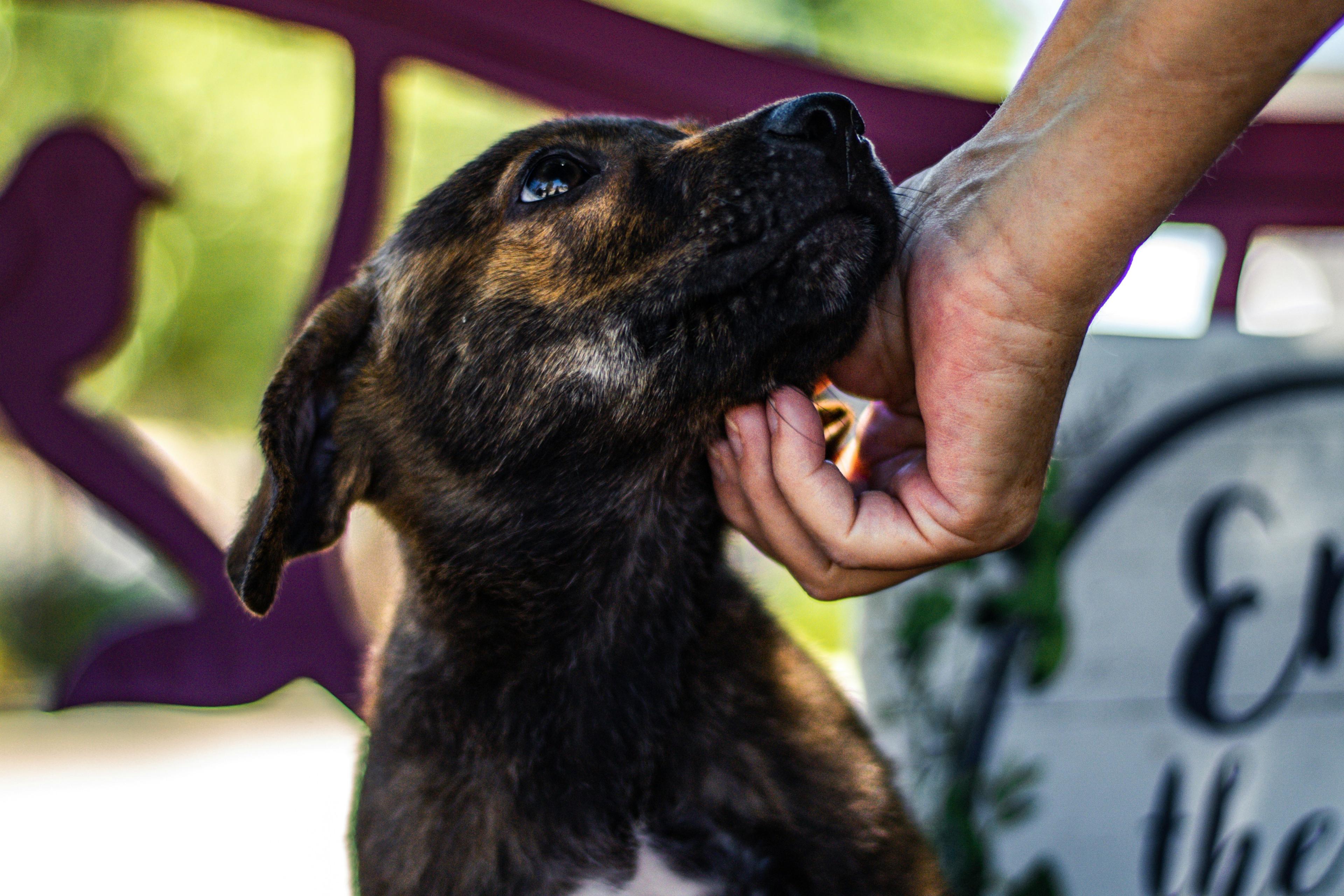
Sobald der Hund näher kommt, können Besucher die Rückseite der Hand zum Beschnuppern anbieten
Bei Akzeptanz: sanftes Kinn- oder Brustkraulen (nicht am Kopf)
Zieht sich der Hund zurück, braucht er mehr Zeit — keine Verfolgung
TIPP: Ein Besucher, der sich auf den Boden setzt, seitlich positioniert ist und Leckerlis wirft, ohne den Hund anzusehen, wird einen selbstbewussten Adoptierhund haben, der ihm innerhalb von 20 Minuten aus der Hand frisst. Es funktioniert immer.
Andere Hunde kennenlernen
Nicht alle Adoptierhunde brauchen Hundefreunde — manche bevorzugen die Gesellschaft von Menschen, und das ist in Ordnung.
Wenn Sie Ihren Adoptierhund einem anderen Hund vorstellen möchten:
Die Neutral-Grund-Regel
Führen Sie Hunde niemals in einem der beiden Häuser ein. Immer auf neutralem Boden — einem Park, einer ruhigen Straße, einem Feld.
Die Parallel-Geh-Methode
Zwei Halter, zwei Hunde, 10+ Meter Abstand
Gehen Sie in dieselbe Richtung (parallel, nicht aufeinander zu)
Verringern Sie den Abstand schrittweise über 10–15 Minuten
Beobachten Sie entspannte Körpersprache bei beiden Hunden, bevor Sie Schnüffeln erlauben
Direktbegegnungen
Erst, wenn die Parallel-Geh-Methode gut funktioniert:
WARNUNG: Hundeplätze sind hochstimulierende, unberechenbare Umgebungen. Viele Adoptierhunde sind davon überfordert. Warten Sie mindestens 3 Monate, bevor Sie es versuchen — und selbst dann gehen Sie zunächst zu ruhigen Zeiten.
Spezifische Ängste angehen
Verkehr und Stadtlärm
Beginnen Sie am Rand eines belebten Gebiets — nah genug, um es zu sehen und zu hören, aber nicht überwältigend
Belohnen Sie ruhiges Beobachten
Verringern Sie den Abstand schrittweise über mehrere Sitzungen
Kinder
Beginnen Sie mit ruhigen, älteren Kindern
Zeigen Sie Kindern, wie sie ihre Hand anbieten und dann warten
Lassen Sie Hunde und kleine Kinder niemals unbeaufsichtigt
Geben Sie dem Hund einen sicheren Rückzugsort
Andere Tiere
Führen Sie Katzen und kleine Tiere zunächst durch eine geschlossene Tür ein (nur Geruch)
Fortschritt zu Sichtkontakt mit einer Barriere (Treppengitter)
Erlauben Sie niemals unbeaufsichtigten Zugang, bis das Verhalten vollständig vorhersehbar ist
Stresssignale, auf die Sie achten sollten
Wenn Sie eines dieser Anzeichen sehen, verlangsamen Sie das Tempo und reduzieren Sie die Herausforderung:
Produkte, die die Sozialisierung unterstützen
TIPP: Die Verweigerung von Futter während der Sozialisierung ist ein klares Zeichen dafür, dass der Hund über der Schwelle ist. Wenn Ihr Hund unterwegs keine Leckerlis frisst, ist er zu gestresst, um zu lernen. Gehen Sie zurück in eine ruhigere Umgebung.
Die Langstrecke
Sozialisierung nach der Adoption misst sich in Monaten, nicht in Tagen.
Viele Adoptierende berichten, dass nach 3 Monaten ein verwandelter Hund zum Vorschein kam — ein Hund, der einst vor Fremden zurückschreckte, begrüßt sie nun mit wedelndem Schwanz. Diese Verwandlung geschieht durch konsequente, geduldige Exposition unter der Schwelle, nicht durch Druck.
F: Mein Adoptierhund ist bei mir in Ordnung, hat aber Angst vor Fremden. Ist das reparierbar?
A: In vielen Fällen ja. Angst vor Fremden spricht gut auf Gegenkonditionierung an: Fremde mit etwas verbinden, das der Hund liebt (Leckerlis, Spielzeug) in einer Distanz, in der der Hund entspannt bleiben kann. Der Fortschritt ist langsam, aber real.
F: Sollte ich meinen Adoptierhund zu Welpen-/Hundeschulklassen mitnehmen?
A: Gruppenkurse können für die Sozialisierung hervorragend sein, aber wählen Sie sorgfältig aus. Achten Sie auf kleine Gruppen, einen gewaltfreien Trainer und fragen Sie, ob Sie vorher hospitieren können. Ein Kurs, der zu schnell voranschreitet oder Bestrafungsmethoden einsetzt, wäre kontraproduktiv.
Teil deiner Rescue-Reise
Verfolge jeden Schritt deiner Adoption — von der Recherche bis zu 3 Monaten zu Hause.
flight_takeoffGrenzüberschreitende Adoption — Länderführer
Adopting a Rescue Dog from Romania to France: Complete Requirements Guide 2026
Romania → France
Adopting a Rescue Dog from Bulgaria to Germany: Complete Requirements Guide 2026
Bulgaria → Germany
Adopting a Rescue Dog from Greece to Sweden: Complete Requirements Guide 2026
Greece → Sweden